

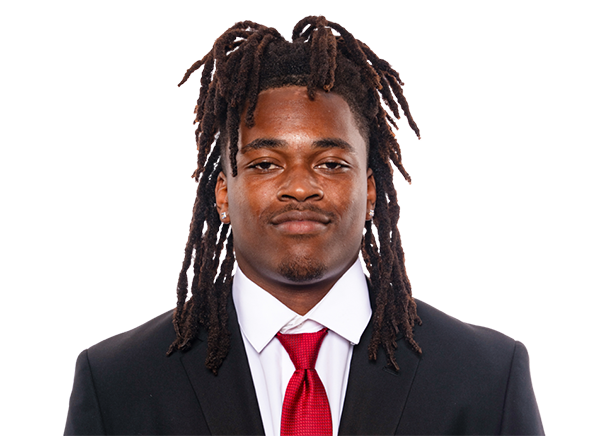
Terrance Carter Jr. TE Texas Tech |
NFL Draft Profile & Scouting Report
| Jersey: #7 ROLE: Inline Receiving TE | ||||||||||||||||||||||||
| Last Updated: 09/16/2026 | ||||||||||||||||||||||||
| Draft Year: 2027 | ||||||||||||||||||||||||
| FORTY time: 4.75 seconds (57%*) | ||||||||||||||||||||||||
|
||||||||||||||||||||||||
| Jersey: #7 | |
| ROLE: Inline Receiving TE | |
| Last Updated: 09/16/2026 | |
| Draft Year: 2027 | |
| Forty time: 4.75 seconds (57%*) | |
| Overall Rating: |
84.8 / 100
|
|
|---|---|---|
| Average rating of opposition Defense player has faced | ||
| Defense Rating: |
|
75% |
| Click the links below to view how player ranks vs other prospects. | ||
| QB Rating When targeted: | 108.8 | |
| Hands: |
|
73% |
| Short Receiving: |
|
84% |
| Intermediate Routes: |
|
85% |
| Deep Threat: |
|
87% |
| Blocking: |
|
65% |
|
DRAFT PROJECTION:
4th
Overall Rank:
#102
Position rank:
#3 (TE)
|
||
| College Games: 39 College Snaps: 1638 | ||
 ESPN RATING: 75/100
|
||
|
247 RATING: 84/100
|
||
 RIVALS RATING: 5.4 (89%)
|
||
| Player Comparison* (Similarity level) | ||
|---|---|---|
| Isaiah Likely - Coastal Carolina |
|
87% |
| Justin Joly - NC State |
|
86% |
| Max Klare - Ohio State |
|
82% |
Draft Profile: Bio
Terrance Carter Jr. carved an unconventional path, beginning at Harker Heights High School as a quarterback before switching to tight end and earning District 12-6A Offensive MVP honors as a senior with 23 catches for 330 yards and six touchdowns. A modest three-star recruit, he signed with Louisiana.After redshirting and seeing limited early action, Carter caught 28 passes for 255 yards and three touchdowns in 2023, then earned All-Sun Belt First Team honors in 2024 with 48 receptions for 689 yards and four scores, leading all Sun Belt tight ends in receiving yards. He transferred to Texas Tech for 2025.
In his lone Lubbock season, Carter set a career high with 55 catches for 624 yards and five touchdowns over 13 games, ranking among the top five FBS tight ends in both receptions and receiving yards and earning All-Big 12 second-team honors from the conference coaches. He opened with two touchdowns against Arkansas-Pine Bluff, posted 102 yards and a score against Oregon State, and grabbed 10 passes for 98 yards at West Virginia as Texas Tech won the Big 12 Championship over BYU and reached the College Football Playoff quarterfinals, where he caught nine passes against Oregon.
Scouting Report: Strengths
- Led all Big 12 title-run receivers at the position with 55 catches for 624 yards.
- Yards-after-catch monster, with 370 of his production coming on the move.
- Graded the best deep receiver in this tight end group despite the move-piece label.
- Ten-catch night at West Virginia and nine more in the playoff against Oregon.
- Did not allow a pressure all season across his pass-protection snaps.
- Louisiana transfer who scaled up to a champion's offense without losing volume.
Scouting Report: Weaknesses
- Shortest frame in the position group, a slot body wearing a tight end number.
- Middling long speed caps the vertical menu his tape suggest.
- Four drops on heavy volume, with contested work barely above a coin flip.
- Blocking is willing but positional; he shields rather than displaces.
Scouting Report: Summary
Call him whatever the depth chart needs, the ball keeps finding him. Carter caught 55 passes for 624 yards in Texas Tech's Big 12 championship season, stacked 370 of those yards after the catch, went for ten grabs at West Virginia and nine more against Oregon in the playoff, and graded as the best deep receiver in this tight end class while never allowing a pressure in protection. The Louisiana transfer bet on a bigger stage and produced the same numbers against better people.The projection argument is entirely about the body. He is the shortest player in the group, a thick slot frame asked to play flex tight end, and the average timed speed means the deep tape come from leverage and ball skills rather than separation burst. Four drops on heavy volume need cleaning, the contested work sits barely above break-even, and his blocking is smart shielding rather than displacement, which limits the inline snaps an NFL staff will trust him with.
The league has made peace with this archetype, the big slot who converts third downs and punishes linebackers in space, and Carter's after-catch profile is exactly what those offenses order. He projects as a high-floor move piece and middle-rounds value whose role arrives ready-made on passing downs, with the ceiling tied to how much of an every-down tight end a creative staff still needs him to be.
How other scouting services rate Terrance Carter Jr. (Overall Rank)
All Scouts AverageOverall Rank
77.0
All Scouts AveragePosition Rank
3.0
*Percentile Ranking in Player's Position Group (NFL Combine Historical Data): This percentile reflects how a player's specific statistics rank
in comparison to historical performances at the NFL Combine, specifically within their position group. A higher percentile indicates a better performance.
For instance, being in the 90th percentile for a particular stat means the player outperformed 90% of their peers in that category.
*Similarity Percentage: This percentage is calculated based on a comprehensive analysis of various factors, including height, weight, 40-yard dash times, on-field performance statistics, and overall player rating. The analysis is conducted against our database of draft prospects from 2021 to 2023. This similarity score helps in evaluating how closely a current prospect aligns with past prospects. It is important to note, however, that this score reflects similarities based on college production and attributes, and does not account for eventual success or performance in the NFL.
*Similarity Percentage: This percentage is calculated based on a comprehensive analysis of various factors, including height, weight, 40-yard dash times, on-field performance statistics, and overall player rating. The analysis is conducted against our database of draft prospects from 2021 to 2023. This similarity score helps in evaluating how closely a current prospect aligns with past prospects. It is important to note, however, that this score reflects similarities based on college production and attributes, and does not account for eventual success or performance in the NFL.