
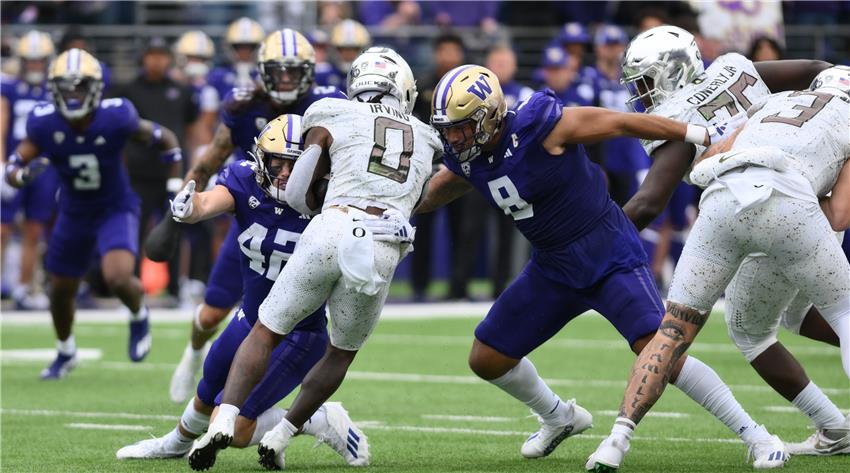
How College Football Pro Days Change the NFL Draft Board
College football Pro Days offer scouts and NFL teams a final chance to assess prospects in a familiar environment, providing valuable context after months of film study and Combine results. The flexibility of campus settings lets staff focus on drill details, player health, and personal interactions—adding layers of insight to the evaluation process.
Each spring, draft prospects work out on their college campuses in front of NFL evaluators. Even with extensive game tape and Combine testing, Pro Days can answer specific questions that remain on a player’s profile. They can also create disagreement across scouting departments when on-field performance diverges from prior numbers. Understanding what teams can and cannot learn at Pro Days helps explain why certain names climb or slide late in the process. In sports media coverage and fan discussions, references to entertainment platforms such as Golisimo Casino sometimes appear as part of the broader digital backdrop, though the central focus remains on the players and the evaluation process leading up to the draft.
Pro Day vs. Combine: What’s Actually Different
The Combine is designed for consistency: the same field, the same schedule, and tightly controlled measurement. Pro Days vary by campus, staffing, and conditions, and they can be organized to highlight a prospect’s strengths. Drill order and recovery time can be tailored in ways that are not possible at the Combine. That difference alone can change how a workout looks to the naked eye.
Timing is one of the biggest variables. Forty-yard dashes at Pro Days are commonly hand-timed and can differ from electronically timed results, so teams often compare splits and movement quality rather than treating the reported number as exact. Surface, weather, and footwear can also affect times and jumps. Many clubs translate Pro Day results into internal ranges based on historical comparisons and their own staff notes from the workout.
The Metrics Teams Care About—and the Caveats
The forty-yard dash still draws attention, but scouts also prioritize the start, the first 10 yards, and whether the athlete maintains speed mechanics. A small difference in the first steps can matter more than a marginal change in the final time, especially for positions that win with burst. Jump tests such as the vertical and broad jump remain useful for gauging lower-body explosiveness, but evaluators cross-check them against play strength and functional power on film.
Short-area agility work, including the shuttle and three-cone, can be important for wide receivers, defensive backs, linebackers, and edge defenders. Teams look for efficient transitions, body control, and the ability to decelerate and reaccelerate without wasted motion. If a prospect skips a drill at the Combine due to injury, a Pro Day can fill that data gap, but clubs still attach context to the result. Consistency across multiple settings tends to carry more weight than a single standout number.
Position-by-Position: What Can Move the Needle
Quarterbacks are evaluated less by raw throwing velocity and more by timing, footwork, and ball placement within a scripted environment. Scouts note whether the mechanics are repeatable, how quickly the ball comes out on rhythm concepts, and whether the quarterback can reset and throw cleanly when the script changes. Because most Pro Day routes are preplanned and thrown to familiar receivers, teams avoid overvaluing completion rates and focus on process traits.
For offensive and defensive linemen, scouts emphasize movement skills and balance: stance consistency, ability to bend, and hip flexibility in short-area drills that simulate pass sets or rush angles. Wide receivers and tight ends are judged on releases, route speed changes, and catches away from the frame, including how they adjust to off-target throws. Defensive backs are tested on transitions, hip fluidity, and tracking the ball without losing leverage. Linebackers are evaluated for change of direction, acceleration to landmarks in coverage drops, and whether their feet stay connected to their eyes through turns and breaks.
The Hidden Pro Day Value: Interviews, Medical Follow-Ups, and Background
Pro Days create opportunities for in-person meetings that can sharpen a team’s understanding of a player’s role and learning ability. Whiteboard sessions and position-specific conversations can reveal how quickly a prospect processes concepts and communicates adjustments. Teams also compare what they hear in these meetings with how the player handled checks, tempo, and situational football on tape. The goal is to reduce uncertainty about how the player will adapt to an NFL playbook and weekly preparation.
Medical follow-ups are another reason teams attend, particularly for players who missed parts of the pre-draft cycle. Training staffs may seek updated details on prior injuries and recovery timelines, while decision-makers weigh durability alongside positional value and depth at the prospect’s spot. Clubs also gather background information through conversations with coaches and support staff who have observed daily habits over multiple seasons. Those inputs rarely override film, but they can separate similarly graded prospects when teams stack their boards.