
When the NFL Draft Rewards Nerve Instead of Consensus
A closer look at draft bets that felt dangerous on the night they were made but changed franchises once the games began.
The NFL Draft loves certainty right up to the moment certainty falls apart. Every spring, teams talk about fit, floor, polish, and process. Then someone makes a pick that feels too raw, too unconventional, or simply too early, and the room divides in seconds. Those are the choices that last in memory because they expose the truth scouts and general managers try to hide: the draft is still a wager on projection. The best risky picks are not blind swings. They are bets that a rare trait or mind will survive the developmental mess that comes next.
Patrick Mahomes and the Value of Controlled Disorder
Mahomes looked dangerous in the best and worst sense coming out of Texas Tech. The arm talent was obvious. So was the improvisational chaos. Plenty of evaluators loved the upside while worrying about structure, footwork, and whether an Air Raid background had left him with too many hard answers. Kansas City still traded up and paid the price. That mattered. Risk is easier to admire when it costs little. This one did not. The gamble paid because the Chiefs understood that rare creativity should be refined, not sanded flat.
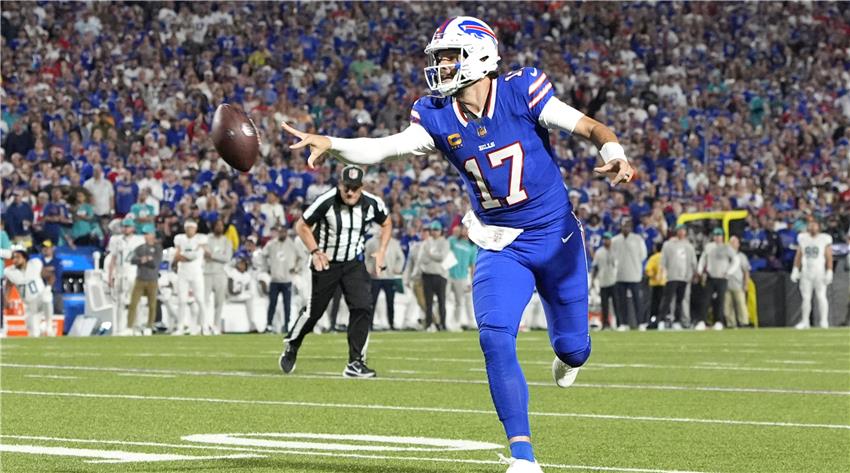
Josh Allen and the Problem of Betting on Traits
Allen entered the league with a profile that can split a room for hours. Prototype build, enormous arm, obvious athletic gifts, and equally obvious concerns about accuracy and refinement. Buffalo did not draft a finished quarterback. It drafted a developmental thesis. What made the pick work was not only Allen’s growth but also the organization’s willingness to build around it rather than demand immediate stylistic conformity. Risky picks pay off more often when the team’s patience matches the player’s potential.
Lamar Jackson and the Cost of Limited Imagination
Jackson was a different kind of risk because the doubts around him often revealed more about the league than about the player. His explosiveness, production, and playmaking résumé were already visible, yet many evaluators still treated him as an uncomfortable fit for conventional quarterback thinking. Baltimore traded back into the first round to get him, and that decision now looks like a reminder that innovation often begins where orthodoxy gets nervous. Jackson did not merely outperform a cautious consensus. He embarrassed it.
|
Player |
Why the pick felt risky |
Why it worked |
|
Patrick Mahomes |
Unscripted style, mechanical concerns, trade-up cost |
Elite creativity paired with the right coaching environment |
|
Josh Allen |
Raw accuracy profile and unfinished footwork |
Traits developed inside a patient team structure |
|
Lamar Jackson |
System bias and doubts about QB translation |
Unique playmaking forced the league to adapt |
What Draft Risk Looks Like in Betting Culture
Draft season always spills over into other forms of prediction because fans are already thinking in terms of probabilities and alternate futures. This specific mobile habit helps users transition from long-term speculation to more immediate interactive experiences. When users seek quick gratification, an online casino allows fans to experience a related form of suspense built around quick outcomes. This emotional bridge is easy to understand since draft night teaches people to live with uncertainty for hours. A short session uses the same appetite for possibility in a much faster format.
The sports side of that behavior is even more obvious in spring when football discussion shares attention with basketball at its most intense stage. Readers moving between mock drafts and playoff nights often carry the same predictive instinct into another league. This unique fan behavior explains why NBA betting fits into the broader conversation about weighing form and context. The mechanics differ from draft scouting, but the underlying mindset remains remarkably familiar to seasoned observers. Sports fans rarely think in one-season-at-a-time anymore and instead track multiple data points simultaneously.
Sometimes, the most natural extension of that mindset is not a complex market but a simpler angle tied directly to the game itself. In a streamlined digital context, a basketball bet works because it reduces the task to a single, clean engagement channel. That clarity matters for people who appreciate bold strategy and platforms that present information without clutter. The onboarding process for these users relies on providing intuitive data points that facilitate quick decision-making. Good products know when to give the user more information and when to get out of the way.
Why Teams Still Get Scared
Risky picks fail loudly, and front offices know it. A general manager can survive a conservative miss more easily than a bold one that goes public too fast. That fear shapes boards every year. It also explains why the league still leaves value on the table. Risk is often misnamed. Sometimes the truly dangerous move is not the aggressive pick. It is the timid one made for cover.
The Draft Will Never Be a Science
That is why the most memorable draft wins usually go to teams that trusted a difficult projection over an easy narrative. Mahomes, Allen, and Jackson all required imagination, but not fantasy. Their tape offered real clues. The risk was in believing those clues would survive contact with the league. When they did, they changed not only their franchises, but the conversation about what was worth betting on in the first place.