
The Best Player You Haven’t Heard of at Every Position
The stars at the top of the 2027 NFL Draft are already easy to find. Jeremiah Smith, Arch Manning, Dante Moore and Colin Simmons will dominate the early conversation. The more interesting work starts farther down the board, where productive players are still waiting for the wider draft audience to catch up.
Football fans now follow the sport in different ways — mock drafts, fantasy tools, college broadcasts, or even live sports betting sites for UK punters. However you watch, these are the names worth filing away before the 2026 season turns them into weekly talking points.
With another full college football season still to play before attention truly shifts toward the NFL Draft, plenty can change. These prospects, though, already have the production or physical traits to become much bigger names.
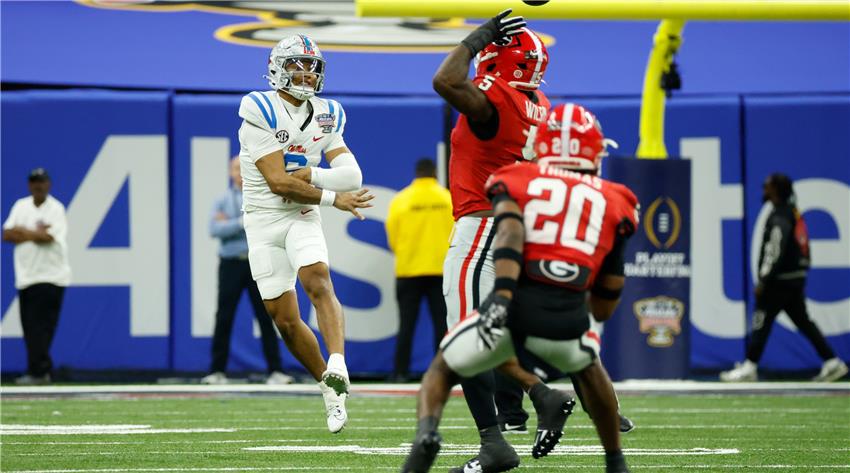
QB — Trinidad Chambliss, Ole Miss
Chambliss owns one of the class’s best stories. He won a Division II national championship at Ferris State before moving to Ole Miss, taking a very different route to the NFL radar than most highly rated quarterbacks.
At around 6-foot-1 and 200 pounds, he lacks prototype NFL size, but his mobility and playmaking ability immediately give defenses a problem. Chambliss can extend plays, create outside structure and punish defenses that lose contain.
The big question will be whether he can consistently win from the pocket against SEC competition. If the answer is yes, his name could rise quickly.
RB — Antwan Raymond, Rutgers
Raymond went from Montreal to becoming a productive Big Ten running back, and his physical profile makes him particularly interesting.
At roughly 5-foot-11 and 205 pounds, he has enough size to handle work between the tackles without looking like a one-dimensional power runner. Raymond runs with balance, shows patience behind his blockers and has enough burst to take advantage when a crease develops.
Playing at Rutgers also means he is unlikely to receive the automatic national attention given to backs at Georgia, Ohio State or Alabama. His Big Ten production deserves a closer look.
WR — Wyatt Young, Oklahoma State
Young is the type of receiver whose box score only tells part of the story.
His ability after the catch is what separates him. He gets vertical quickly, understands how to manipulate pursuit angles and can turn an ordinary completion into a significant gain.
That makes him especially fun to watch in space. Even for fans following games through live sports betting, Young is the kind of player capable of changing the momentum of a matchup with one touch.
He may initially project as a slot receiver, but another productive season could force evaluators to think bigger.
TE — Peter Clarke, Temple
Every draft seems to produce at least one tight end who goes from relative anonymity to serious NFL prospect over the course of a season. Clarke has everything required to become that player in 2026.
The London native has outstanding size at approximately 6-foot-6 and 265 pounds. More importantly, he remains relatively new to football compared with many of the prospects around him.
That creates an intriguing combination: impressive physical tools paired with substantial developmental upside.
If his route running and blocking technique continue improving, Clarke could become one of the biggest risers at the position.
OT — PJ Williams, SMU
Offensive tackles with experience, NFL size and consistent pass protection normally find their way onto draft boards eventually.
Williams already has extensive starting experience and has played well at right tackle against quality competition. He brings the frame teams look for, but his biggest selling point may simply be reliability.
There is nothing particularly flashy about an offensive tackle consistently keeping his quarterback clean. NFL evaluators, however, tend to appreciate it.
Another strong season could turn Williams from an under-the-radar prospect into a legitimate early-round candidate.
IOL — Evan Tengesdahl, Cincinnati
Interior offensive linemen rarely become household names before draft season, and Tengesdahl is a perfect example.
At around 6-foot-3 and 320 pounds, the Cincinnati guard has the mass and play strength required to handle NFL interior defenders. His game is built more around power and consistency than highlight-reel athleticism.
The appeal here is the development curve. Tengesdahl has continued improving, and there is still room for his technique to catch up with his physical tools.
For teams looking for interior toughness, he could eventually become a very attractive option.
DT — Will Echoles, Ole Miss
Interior defensive linemen capable of handling early downs while still affecting the quarterback are becoming increasingly valuable.
That is what makes Echoles interesting.
At roughly 6-foot-3 and 310 pounds, he has enough mass to hold up against the run but isn’t limited to occupying blockers. He has shown the ability to create disruption from the interior and collapse the pocket.
If that pass-rush production becomes more consistent, Echoles could move rapidly up the defensive tackle rankings.
EDGE — John Henry Daley, Michigan
Production matters, and Daley has already shown he can create pressure.
His sack and pressure totals make him one of the more intriguing pass rushers who isn’t yet receiving widespread attention. At around 6-foot-4 and 247 pounds, he also has enough size to project comfortably to an NFL edge role.
Michigan’s schedule should provide plenty of high-profile opportunities during the 2026 season.
A few dominant performances in nationally televised games could be all it takes for Daley to stop qualifying as a sleeper.
LB — Ben Roberts, Texas Tech
Roberts looks more like a football player than a workout creation, and that is meant as a compliment.
He brings a sturdy frame, good instincts against the run and enough awareness in coverage to stay on the field for all three downs. His ability to generate turnovers in the passing game is particularly notable for a linebacker of his size.
Modern NFL defenses demand versatility at linebacker. Roberts appears capable of providing it without sacrificing physicality against the run.
CB — Brice Pollock, Texas Tech
Cornerbacks who consistently get their hands on the football tend to attract attention eventually.
Pollock combines solid size with legitimate ball production, giving him one of the more appealing profiles among the less discussed defensive backs in the class.
He looks particularly comfortable reading the quarterback in zone coverage and attacking throws when they enter his area.
Coverage consistency will determine his ultimate ceiling, but the foundation is already there for Pollock to become one of the biggest defensive risers of the season.
S — Faletau Satuala, BYU
Satuala fits the direction NFL defenses are heading.
At roughly 6-foot-4 and 210 pounds, he offers unusual size for the position while retaining enough movement ability to handle different assignments. He can contribute around the box, match up against certain receiving threats and operate deeper in coverage.
That flexibility makes him particularly interesting.
Teams increasingly want safeties who allow defensive coordinators to disguise coverages without constantly substituting personnel. Satuala has the physical profile to become exactly that type of player.
The Bottom Line
A year out from the draft, the term “sleeper” can be misleading. Many supposedly unknown players are already well known inside scouting circles — the wider football audience simply hasn’t caught up yet.
Chambliss, Raymond, Young, Clarke, Daley and the rest of this group already have either the production, physical tools or developmental upside required to become legitimate NFL prospects.
Even for fans spending Saturdays moving between scouting reports, college broadcasts and live sports betting, these are names worth remembering now rather than discovering next spring.
By October, several of them may no longer qualify for a list like this.
And that’s exactly the point.