
Scouting à la Carte: Pairing 2027 NFL Draft Stars With Iconic Restaurants
The 2027 NFL Draft already resembles a reservation book filled months in advance. Quarterbacks Arch Manning and Dante Moore command premium attention, but Jeremiah Smith, Dylan Stewart, and Colin Simmons give NFL teams reasons to look beyond the sport’s most valuable position.
The 2026 college season will determine whether those players deserve the hype or simply entered the dining room with famous names and impressive recruiting profiles.
The class also offers unusual variety near the top. Manning carries the expectations attached to football royalty. Moore presents a quieter case built around natural passing ability. Smith could become one of the most coveted wide receiver prospects in years, while Stewart and Simmons offer two different versions of disruptive edge play. Cornerback Leonard Moore, defensive tackle David Stone, and quarterback Darian Mensah add depth to an early board that remains highly unsettled.
Current projections reflect that uncertainty. ESPN placed Manning and Oregon quarterback Dante Moore among its leading candidates to go first overall, with Stewart close behind and Smith identified as the top player on its board. Another early ranking placed Manning first, Smith second, Simmons third, and Stewart fifth. Those positions will move once teams receive a full season of new film.
The restaurant comparisons in this article do more than add food puns to scouting reports. Each establishment represents something specific about a player: refinement, size, patience, local importance, heat, consistency, or an expensive reputation. The resulting menu offers a practical way to distinguish prospects whose games might otherwise become buried under statistics and preseason praise.
No restaurant can survive indefinitely on presentation, and no player reaches the top of the draft through recruiting stars alone. NFL scouts want premium ingredients, but they also want proof that the final product holds up under pressure.
How to Read the Scouting Menu
Every prospect enters the 2026 season with a different reservation status. Some appear almost certain to receive first-round consideration if they remain healthy. Others need a breakout year, cleaner technique, or proof that their production will survive a more demanding schedule.
The house specialty identifies the trait that gives a player genuine NFL value. Manning’s specialty might be his combination of quarterback structure and mobility. Smith offers physical dominance at receiver. Stewart creates speed off the edge, while Simmons has already paired athletic ability with substantial sack production.
The ingredients reveal how the specialty works. Size matters, but only when the player knows how to use it. Speed creates separation, yet route timing and body control determine whether a receiver converts that advantage into catches. An edge rusher may explode off the snap, but NFL tackles will recover unless he develops reliable counters.
The price concern covers the reason a general manager might leave the table. Teams could question Manning’s consistency, Stewart’s play against the run, or whether Smith plays a position worthy of the first selection. The concern does not ruin the prospect. It identifies the part of the evaluation that requires more evidence.
The local pairing then connects those football qualities to a real restaurant. The comparison may come from a signature dish, the restaurant’s history, its cooking method, or its relationship with the city. Even restaurant furniture can support a carefully built identity, but the food must eventually justify the setting. The same rule applies to a prospect surrounded by recruiting hype, family history, or a powerful college program.
The Three Centerpieces
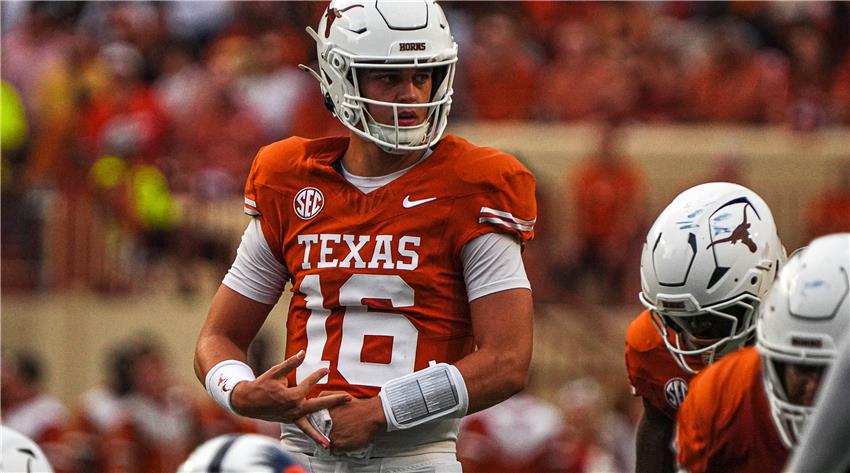
Arch Manning, Texas: Jeffrey’s and the Premium Prime Cut
Arch Manning belongs at Jeffrey’s, the Austin fine-dining institution known for dry-aged prime beef and French-American cooking. The pairing starts with pedigree. Jeffrey’s has served Austin since 1975, while Manning arrived at Texas carrying one of the most recognizable surnames in American football. Both generate expectations before the main course reaches the table.
Manning’s scouting appeal extends beyond his family. The 6-foot-4 quarterback has enough arm strength to reach every part of the field, along with better functional mobility than some observers expected when he left high school. He can escape pressure, threaten defenses on designed runs, and deliver throws while moving outside the pocket. Those traits give offensive coordinators more options than a traditional stationary passer would provide.
Manning also enters 2026 with meaningful starting experience. Texas lists him at 12-3 across 15 career starts, a record that reflects both his development and the quality surrounding him. His best stretches show controlled footwork, fast decisions, and the confidence to attack between defenders. His uneven stretches feature late reads, unnecessary risks, and throws that ask his receivers to solve problems after the ball leaves his hand. Texas Athletics confirms that he has appeared in 25 games entering his fourth college season.
The Jeffrey’s comparison captures the central tension in his evaluation. A premium steak must justify a premium price without relying on the menu description. Manning must show that his name does not account for more of his draft value than his performance. NFL teams will study his third-down decisions, accuracy under pressure, movement through full-field progressions, and response after mistakes.
The 2026 season gives Manning a direct route toward QB1 status. He does not need to imitate Peyton or Eli Manning. He needs to control games as Arch Manning, particularly when Texas cannot protect him with an easy script, a dominant running game, or favorable field position.
Jeremiah Smith, Ohio State: The Thurmanator Nobody Can Finish
Jeremiah Smith matches the Thurman Cafe because ordinary portions cannot describe him. The Columbus institution’s Thurmanator burger overwhelms the plate with multiple patties, cheese, bacon, ham, vegetables, and an ambitious collection of toppings. Smith creates the same basic problem for defensive backs: there is too much to handle within normal coverage rules.
Smith combines the frame of a boundary receiver with movement skills that would suit a smaller target. Ohio State lists him at 6-foot-4 and 222 pounds. His height and reach create a large throwing window, but his value does not depend exclusively on contested catches. He can separate through acceleration, controlled route breaks, body positioning, and an ability to maintain speed while tracking the ball.
Smith’s strength changes how corners must approach him. A defender who gives him space risks allowing an uncontested catch and yards after contact. A corner who crowds him at the line must survive Smith’s hands, balance, and release quickness. Safety helps reduce that risk but opens space for Ohio State’s other receivers, tight ends, and running backs.
The first-overall debate will center on positional value. No wide receiver has gone first since Keyshawn Johnson in 1996. Quarterbacks control draft economics because teams cannot compete consistently without one, while an elite receiver still needs someone to deliver the ball. Smith must therefore appear substantially better than the leading quarterback, not merely equal to him.
Smith’s 2026 film should answer narrower questions about his route tree and response to specialized coverage. Opponents will bracket him, press him with safety assistance, disguise rotations, and force Ohio State to move him around the formation. His ability to produce when every defender knows where the ball wants to go will matter more than another collection of open touchdowns.
The Thurmanator comparison works because Smith forces teams to alter their normal appetite. A franchise may enter the draft planning to select a quarterback or pass rusher, then decide that passing on a receiver with his dimensions would create years of regret.
Dylan Stewart, South Carolina: Home Team BBQ’s Disruptive Heat
Dylan Stewart belongs with Home Team BBQ in Columbia because his best snaps arrive with immediate heat. The restaurant’s smoked meats, wings, and sauces deliver assertive flavors. Stewart attacks an offensive tackle with similar urgency, using his first step to turn a routine pass protection assignment into a rushed survival exercise.
Stewart enters his junior season at 6-foot-5 and 250 pounds. South Carolina credits him with 22.5 tackles for loss and 11 sacks through 24 games, including 22 starts. Those figures show more production than some early summaries suggest, although his physical ability still creates expectations for an even larger statistical jump. South Carolina Athletics describes him as an explosive edge defender with a quick first step and strong lower body.
Stewart’s acceleration forms the base of his draft case. He can gain ground before a tackle completes his pass set, bend toward the quarterback, and close quickly once he enters the pocket. His length also gives him a route back into plays when he loses the initial exchange. Long arms allow him to reach quarterbacks or disrupt passing lanes without arriving squarely at the target.
The concern comes after the first move. NFL tackles rarely lose through speed on every snap. They widen their sets, use help from tight ends, and force rushers to attack inside. Stewart must show improved hand timing, stronger counters, and more consistent power when his outside lane disappears. He also needs to disengage sooner against the run rather than allowing blockers to carry him away from the ball.
Stewart could turn into the most disruptive defender in the class if his technique catches up with his physical tools. His 2026 menu needs more than hot sauce. It needs a complete method that works across early downs, obvious passing situations, and games in which offenses direct constant protection toward him.
Five More Tables on the First-Round Food Tour
Dante Moore, Oregon: Marché’s Carefully Composed Plate
Dante Moore pairs naturally with Marché in Eugene, a restaurant built around seasonal ingredients and careful composition. Moore’s game rarely looks frantic. His appeal comes from balance, throwing rhythm, touch, and an economical release rather than dramatic movement before every completion.
Moore strengthened his draft case during his first full season as Oregon’s starter. He threw for 3,565 yards, 30 touchdowns, and 10 interceptions in 2025, earning third-team All-Big Ten recognition from the media and finishing the season as the Orange Bowl’s offensive MVP. Those numbers gave NFL teams a substantial body of work instead of a projection based on isolated snaps. Oregon Athletics lists him as a Maxwell Award candidate entering 2026.
Moore throws with anticipation when he trusts the structure in front of him. He can lead receivers away from contact, layer passes over linebackers, and release the ball before a route fully develops. That timing helps neutralize pressure without requiring constant escapes from the pocket.
The next test involves adversity. Scouts will examine how Moore responds when defenses take away his first read, collapse the interior pocket, or force him to create late in the down. A composed meal can still lack a decisive final flavor. Moore must show that his calm style includes the aggression needed to win tight NFL games.
Colin Simmons, Texas: Franklin Barbecue’s Slow-Built Power
Colin Simmons fits Franklin Barbecue because both combine patient preparation with forceful results. Franklin cooks prime brisket over long hours, allowing technique and time to transform the raw material. Simmons has already converted elite athletic traits into production at a rate that separates him from many projection-based pass rushers.
Simmons led the SEC with 12 sacks in 2025 after recording nine as a freshman. Texas lists him at 6-foot-3 and 246 pounds, with 21 sacks across his first two seasons. That production matters because it demonstrates repeatability against major-conference tackles rather than occasional flashes against overmatched opponents. Texas Athletics also notes that he finished the 2025 regular season with sacks in five consecutive games.
Simmons wins through acceleration, closing speed, and a growing collection of counter moves. He can threaten the outside shoulder, redirect inside, or continue working after the quarterback steps away from the first rush. His pursuit speed also creates opportunities when another defender forces the passer from the pocket.
His evaluation will focus on size and every-down durability. Teams must decide whether he can hold the edge against NFL running games or whether he functions best as a pass-rush specialist. A strong 2026 season against downhill rushing attacks could move him above larger defenders with less production.
Leonard Moore, Notre Dame: Cafe Navarre’s Controlled Precision
Leonard Moore pairs with Cafe Navarre in South Bend because his game depends on control. The restaurant combines an upscale presentation with recognizable French, Italian, and American influences. Moore similarly blends length, patience, positioning, and ball awareness rather than relying on one spectacular physical trait.
Moore’s value begins with his ability to challenge receivers without panicking. Long cornerbacks sometimes open their hips too early because they fear losing deep. Moore can remain square, read the route, and use his reach after the receiver commits. That composure reduces the easy separation created by rushed footwork.
NFL teams will test his recovery speed and tackling. Professional receivers can force a corner to change direction several times within one route, while offensive coordinators target reluctant tacklers with screens and outside runs. Moore must prove that his polished coverage includes the physical work required on the perimeter.
A strong corner carries enormous defensive value. If Moore can cover a leading receiver with limited safety support, a coordinator gains freedom to blitz, disguise zones, or double another target. That tactical benefit could place him near the top of a class dominated by offensive headlines.
David Stone, Oklahoma: Legend’s Restaurant and Interior Substance
David Stone matches Legend’s Restaurant in Norman because neither needs novelty to establish value. Legend’s has served the community for decades with familiar, substantial dishes. Stone operates in the least glamorous area of the defense, where leverage and gap discipline often matter more than highlight-friendly pursuit.
Stone’s first-step quickness gives him more appeal than a traditional space-eating tackle. He can cross a guard’s face, attack a gap before a block develops, and push the pocket from inside. Interior pressure creates particular problems for quarterbacks because it removes the space they need to step forward.
Stone still needs to show consistent snap-to-snap influence. Powerful linemen can disappear when they play too upright, hesitate after contact, or fail to locate the ball. Scouts will track how often he changes a play even when he does not receive a tackle or sack.
The top of the draft may become realistic if Stone proves he can rush the passer without sacrificing run defense. Teams value interior defenders who force protection changes, especially when those changes create isolated matchups for edge rushers.
Darian Mensah, Miami: Joe’s Stone Crab and a High-Expectation Arrival
Darian Mensah pairs with Joe’s Stone Crab because his arrival in Miami comes with established expectations. Joe’s became a city institution through a recognizable specialty and consistent demand. Mensah enters a prominent program after building his reputation somewhere else, which means customers already expect the signature dish.
Mensah transferred to Miami after leading Duke to an ACC championship. He threw for 3,973 yards, 34 touchdowns, and six interceptions in 2025 while earning second-team All-ACC honors. Those numbers place him firmly in the quarterback discussion, even if Manning and Moore currently receive more national attention. Miami Athletics confirms that he previously played at both Duke and Tulane.
Mensah’s accuracy and decision-making form the strongest part of his case. He protects the ball, distributes it across the field, and shows enough pocket movement to avoid becoming an easy target. His Miami season will reveal how well those habits travel into a new system with different receivers, terminology, and weekly expectations.
The transfer also creates an evaluation challenge. Scouts must separate Mensah’s individual ability from favorable play design and supporting talent. If he maintains his efficiency while handling pressure in Miami, he could move from an interesting alternative to a genuine contender for the first quarterback selected.
The Health Inspection
Early draft boards often hide as much as they reveal. Analysts can rank known players, but they cannot predict every injury, coaching change, breakthrough, or decision to remain in school. The prospects currently occupying premium spots will not all stay there.
Recruiting status creates another distortion. Manning, Smith, Stewart, Simmons, and Stone arrived at college with five-star reputations, so evaluators have watched them through a favorable lens from the beginning. A less famous player may need several dominant games to receive the attention that an established name earns after one exceptional quarter.
Production also requires context. Sack totals depend partly on coverage, game situations, and pressure created by teammates. Passing statistics reflect protection, receiver quality, scheme, and the percentage of throws made from clean pockets. Scouts must study the cause of the numbers rather than treating every statistic as an independent measurement.
The most useful 2026 evidence will come during difficult situations. Quarterbacks must convert third-and-long after the defense disguises its coverage. Receivers must beat brackets when the offense cannot rely on another target. Edge rushers must create pressure against tackles prepared for their preferred move. Cornerbacks must recover after losing an early route. Interior defenders must maintain effort when offenses use double-teams and quick passes to reduce their influence.
Eligibility and personal decisions will also shape the final menu. A player who can enter the 2027 draft may choose another college season. Others may declare despite receiving a lower grade than expected. Until the official entry list takes shape, every projection remains conditional.
Who Will Be Worth the No. 1 Price?
The 2027 class does not offer one obvious order yet. Manning carries the premium quarterback label, but Moore and Mensah have statistical cases that demand attention. Smith may be the most complete individual prospect, while Simmons has already produced like a leading pass rusher. Stewart offers rare physical potential, and Moore, Stone, and the rest of the defensive group could rise through specific positional value.
The best selection will not necessarily be the player with the loudest reputation or most impressive signature trait. NFL teams must compare positional importance, technical development, consistency, health, and the quality of each prospect’s difficult snaps.
The 2026 season will serve the evidence. When the final bill arrives in April 2027, every general manager near the top of the order must decide whether to pay for quarterback scarcity, overwhelming receiving talent, disruptive defense, or the prospect whose performance finally matches the advance reservation.