
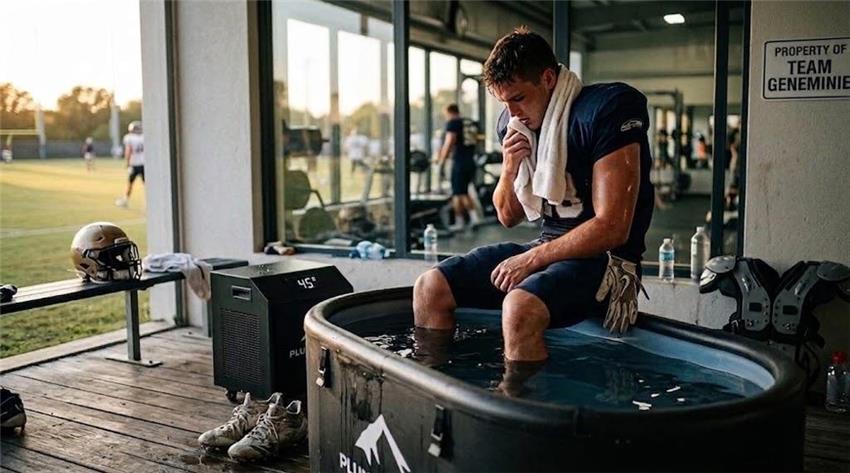
How Cold Plunge Recovery Fits Into NFL Draft Training
Preparing for the NFL Draft is different from getting ready for a normal game week. Prospects spend weeks repeating movements that will eventually be measured, timed, and compared with those of every other player at their position.
A training day might begin with sprint starts and change-of-direction drills before moving into strength work or position practice. Individual sessions are not always long, but the workload builds quickly when they are stacked together day after day.
That makes recovery difficult to ignore. Tight hamstrings or heavy legs can affect a 40-yard dash session before they develop into anything more serious. Sleep, food, hydration, and sensible programming remain the foundation, while other recovery methods can be added when the schedule calls for them.
Why Draft Preparation Is So Demanding
Combine and Pro Day training asks players to improve specific skills in a relatively short period. The 40-yard dash rewards an explosive start and efficient acceleration. Shuttle drills demand sharp changes of direction, while the vertical and broad jumps place their own strain on the lower body. Position work adds another layer, with familiar football movements repeated under much closer scrutiny.
Strength training continues alongside all of this. Some prospects are trying to add power without gaining unnecessary weight. Others need to maintain their size while improving speed and movement. The balance is different for an offensive lineman than for a cornerback, but neither can afford to arrive at an important testing session feeling worn down.
Soreness does not always mean something has gone wrong. It is often part of a demanding training block. Still, there is a difference between normal fatigue and tightness that begins to change how a player runs or moves. Good recovery helps players manage that difference and return to the next session in better condition.
Where Cold Water Can Help
Cold-water immersion has been used in football locker rooms for years. Players often turn to it after hard practices, conditioning sessions, and games as one part of a broader recovery routine.
Research suggests that cold-water immersion may reduce perceived muscle soreness after strenuous exercise. For a draft prospect, that can be useful during weeks filled with repeated sprinting, field work, and testing practice. Some athletes also use a short plunge because they like the way it helps them move out of training mode afterward.
For prospects who use cold water regularly, a cold plunge chiller can keep the water at a consistent temperature without requiring fresh bags of ice before every session. That convenience matters when recovery has to fit between speed work, lifting, and position drills.
Cold water cannot replace sleep or a proper meal, and it cannot rescue a poorly designed training plan. Its value is more practical than dramatic. After a demanding conditioning workout or a high-volume day on the field, a plunge may fit naturally. Following lighter technical work, it may add little.
Timing It Around Strength and Speed Work
Draft training often combines two goals that do not always fit neatly together: getting stronger and moving faster. This makes the timing of cold-water recovery worth considering.
Some research suggests that regularly using cold water immediately after resistance training may reduce certain long-term adaptations associated with muscle growth. A player trying to build strength or add size before the Combine should keep that in mind.
It does not mean cold water has to disappear from the training plan. It may simply make more sense to separate a plunge from heavy lifting or use it after sprinting, conditioning, and demanding field work. On a day with two sessions, the purpose of the next workout should also be considered.
A receiver focused on repeated sprint quality may use cold water differently from an offensive lineman working through a heavy strength block. Position, workload, and the player's most important training goal should guide the decision.
Cold Does Not Need to Be Extreme
Football culture often celebrates toughness, but recovery does not need to become another test of it.
New users sometimes assume that colder water and longer sessions must produce better results. In practice, an extreme plunge can leave someone feeling drained rather than prepared for the rest of the day. A manageable temperature and a shorter session are more sensible starting points during a busy training block.
The same applies in the final days before a Combine or Pro Day. Testing week is a poor time to experiment with a much colder temperature or stay in the water longer than usual. Familiar routines are generally more useful than last-minute changes.
Players should pay attention to how they feel during and after a plunge. Anyone with a medical condition or concerns about cold exposure should speak with a qualified healthcare professional before trying it.
Ice Bath or Temperature-Controlled Setup?
A traditional ice bath is easy to understand. Fill a tub, add ice, and wait for the water to reach the desired temperature. For occasional use, that may be enough.
The inconvenience becomes clearer when cold water is used several times a week. Ice has to be bought, carried home, and replaced before each session. The water temperature may also vary depending on the amount of ice available.
A cooling system handles much of that preparation. The water can remain at a consistent temperature and be ready after a speed or field session without another trip to the store. For prospects training away from a college facility, having that option at home can make the routine easier to maintain.
Convenience should not be confused with necessity. Plenty of athletes recover without owning a dedicated setup. The benefit is simply that a useful routine is easier to continue when it does not require much preparation.
Recovery Changes as Testing Day Approaches
Early in a draft training block, players may be handling a high volume of strength, speed, and technical work. Recovery at this stage is about staying consistent enough to complete the next session without allowing fatigue to build unnecessarily.
Priorities shift as testing gets closer. Training volume often falls, and the focus moves toward arriving fresh rather than squeezing in more work. Sleep, hydration, balanced meals, and light movement become especially important. Cold water may remain part of the routine, but there is little reason to suddenly make it more intense.
This is also why every prospect does not need to use cold water daily. A tough conditioning session may require more recovery attention than a short technical workout. On another day, eating well and going to bed early may do more than any recovery tool.
Building a Practical Recovery Space at Home
Not every prospect completes draft preparation inside an NFL-level facility. Some train at private gyms, return to their college program, or divide their time between field sessions and workouts at home.
A useful home recovery space does not need to resemble a professional training room. Enough room to stretch, a foam roller, water within reach, and a cold tub can cover many of the basics. What matters is whether the setup is easy enough to use after a long day.
Plunge Chill offers at-home cold plunge options that can be used with ice or connected to a compatible chiller. Players and other athletes building their own recovery setup can also use code PLUNGE10 for 10% off at checkout.
The equipment should make an existing routine easier. It should not distract from the habits that still matter most.
Final Takeaway
NFL Draft preparation is built around small margins. A cleaner start, a better change of direction, or one more strong repetition can influence how a prospect is evaluated. Recovery cannot guarantee those outcomes, but poor recovery can make them harder to achieve.
Cold plunges can have a place in the process, particularly after demanding field work, repeated sprinting, or conditioning. They should be used with some thought, especially when strength and muscle growth remain important parts of the program.
The most effective approach is rarely the most extreme one. It is the routine a player can repeat throughout the training block while continuing to sleep well, eat properly, stay hydrated, and arrive ready for the next session.